


Común: Your money, your way
4.82.75K Reviews
App Specs
- Version
- 2.29.0
- Updated On
- License
- Free
- Downloads
- 500,000+
- Developer
- Comun
- Categories
- Finance
- Platform
- Android
Screenshots
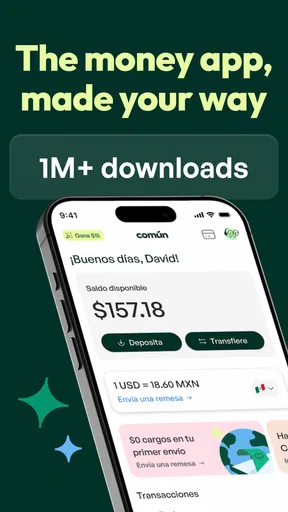
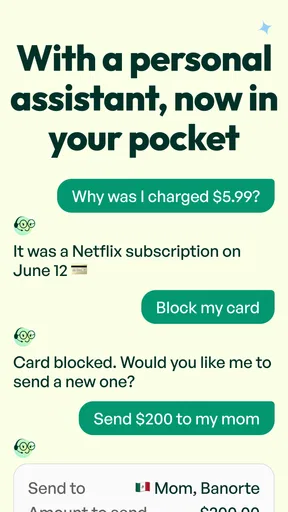
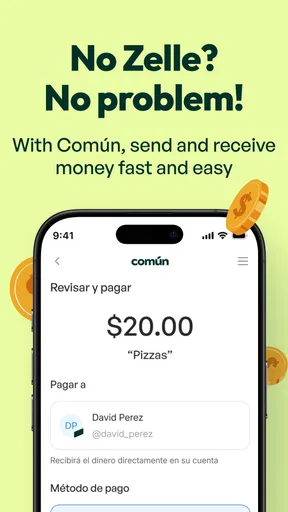
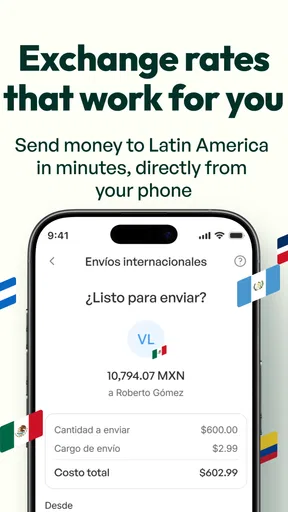
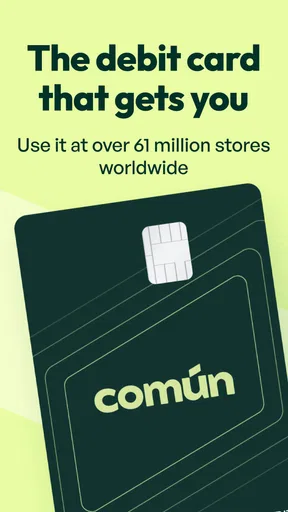


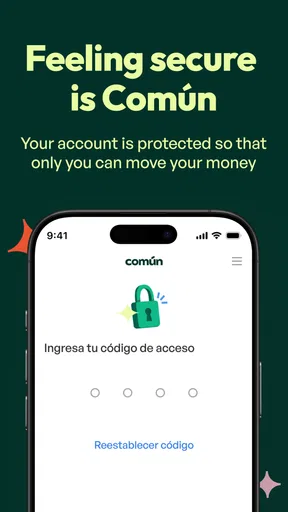
 Analysis by AppCompare
I tend to judge a money app less by its first impressive screen than by whether I still have a reason to open it after the first week. Común has a clear everyday purpose: it is a finance app from Comun for paying people, sending money to Latin America, and using a Visa debit card. That combination makes it more interesting than a tool that only displays charts, especially if your financial routine includes people or spending across borders. Its appeal is practical, but the details of your own routine will determine whether it deserves a lasting place on your phone.
From the first week to a lasting money habit
I look at Común’s first-week appeal as a practical trial, not a reason to move every payment at once. Trying one familiar transaction first can show whether its mix of person-to-person payments, transfers to Latin America, and a Visa debit card fits your real routine; from there, the more telling question is whether that convenience still matters month after month.
What makes the first week appealing
In the first few days, the most useful question is not whether an app can transform your finances; it is whether it makes a task you already do feel simpler. If you regularly pay friends or relatives, send money to Latin America, or want a debit card connected to your everyday spending, Común puts those needs under one roof. That can be a welcome change from switching between a payment app, a separate card account, and a bank app just to keep track of ordinary money movements.
A realistic first-week test is to use it for one familiar transaction rather than immediately rebuilding your entire financial routine around it. For instance, if you owe a family member money, you can check whether paying them through the app feels straightforward and whether the process fits the way you already handle payments. If you are considering the Visa debit card, treat the first few days as a chance to learn where it fits: is it for regular purchases, a particular set of expenses, or simply another payment option? Starting small lets you judge the practical experience without making assumptions about how much of your financial life it should replace.
The app is free to download, rated for Everyone, and has a 4.7 average from around 20,000 ratings. Those figures give a newcomer some reassurance that it has attracted a substantial audience, but they do not tell me whether it fits a particular person’s situation. I would use the first week to check the parts that matter to you: how easily you can make the payments you expect to make, how comfortable the card feels as part of your routine, and whether the app’s layout gives you enough clarity to act with confidence.
Where the recurring value comes from
Payment apps can be useful in bursts: you install one, complete a transfer, and forget it until next time. Común has a better chance of earning regular use if the combination of payments, Latin America transfers, and a debit card lines up with expenses that recur in your life. Someone who sends money to relatives repeatedly may value having that purpose close at hand, while a person who mainly wants a way to split an occasional dinner bill may have less reason to keep another finance app in regular rotation.
For month-to-month use, I would give each part of the app a distinct job instead of treating it as a vague “money hub.” Use it for the payments or transfers that are a natural fit, and decide separately whether the Visa card belongs in your regular spending. That small bit of planning helps you avoid the common trap of adding a new payment method without knowing which expenses it should handle. A useful personal rule might be to reserve it for a particular recurring type of purchase, then check whether using it actually makes those transactions easier to manage.
Worth Reading Before You Choose

EA SPORTS FC Mobile 26 Is a Bigger Football Game, but It Takes Time

Flipboard Shows What News Apps Must Do Beyond the Feed

Switching to Android Auto Means Rethinking Your Driving Routine

Google Calendar Makes a Crowded Week Easier to Manage

Ludo King Makes the Most of the Minutes Between Plans

Baby Panda World Brings Quick Play to Modern Phones, but Its Game Library Feels Busy
Común has over 500,000 installs, which suggests that it is not a niche tool with only a handful of users. Still, popularity cannot tell you how a transfer will work for your own recipient, nor does it establish whether the app is the best option for every payment. I would compare the process with the method you currently use, paying attention to the steps involved and whether it is convenient for both sides. If the other person would have to change their habits just to receive money, that friction matters as much as a tidy experience on your own screen.
Keeping the setup useful, not fussy
The easiest way for a finance app to become a burden is to demand attention without helping you make a decision. I would keep Común’s role narrow at first: use it for the transactions that drew you to it, and review whether it is still helping after a normal month of spending. If a payment or transfer is occasional, there may be no need to check the app every day. If the debit card becomes part of your routine, a quick, regular glance at the activity can help you notice whether you are using it as intended rather than letting another payment channel blur your picture of spending.
One practical tip is to decide in advance what “working well” means for you. That might be being able to handle a recurring payment in one familiar place, or simply feeling that the card is convenient for the purchases you chose. Another is to keep your existing payment method available while you learn the new one, rather than switching everything at once. This makes it easier to spot a point of friction and gives you a fallback if a transaction does not go as expected. These are ordinary habits, but they are more useful than downloading a finance app and hoping that it will automatically improve money management.
There is also a trade-off in bringing several money tasks into one app. Fewer places to check can make a routine feel simpler, but relying on one service for payments and card spending means you should be comfortable with its role and support options. I would not move a payment that must happen on a particular schedule until I had learned how the relevant flow works for me. Nor would I assume that an app’s presence on my phone means I should use it for every financial need. A focused role is often easier to maintain than an ambitious one.
When novelty turns into fatigue
New finance apps can feel rewarding simply because they make familiar tasks look fresh. That effect fades. The lasting question is whether Común remains useful when you are not exploring it, but just trying to pay someone or manage an everyday purchase. If you do not make international transfers and already have a debit card that suits you, the central reasons to keep it may be less compelling. In that case, the app could become one more account to remember rather than a meaningful improvement.
Another source of fatigue is expecting a payment app to serve as a complete budgeting system. Común’s central appeal is its mix of payments, transfers to Latin America, and a Visa debit card; I would assess it on those jobs rather than assume it should replace a full bank account or dedicated budget tracker. People who want detailed household planning, broad account aggregation, or a particular set of budgeting tools may be better served by a product built specifically around those needs. Choosing the narrower tool is not a failure: it simply keeps expectations aligned with what you actually want to do.
Cross-border needs also call for a little care. Before making a transfer you rely on, check the recipient details and take time to understand the steps shown in the app. A familiar payment habit can make people move quickly, but a moment spent confirming who will receive the money is worthwhile. I would not treat a smooth interface as a substitute for checking the transaction itself. That is sensible practice with any money service, and especially important when the other person is in another country or when a transfer is time-sensitive.
Común is most promising for someone whose everyday life connects naturally to its main uses: sending money to Latin America, paying other people, or wanting a Visa debit card within the same app. It is less of an obvious fit for someone who only wants to track expenses, has no recurring need for those payments, or prefers to keep all spending inside an established bank account. The useful comparison is not “which app has the most features?” but “which option makes my actual routine easier without adding another chore?” For one person, a bank card and a separate transfer service may remain clearer; for another, Común’s combination may reduce the number of tools they reach for.
A grounded long-term verdict
Común is a free finance app from Comun, first released on August 30, 2022, and its current version is 2.22.0. It is available for devices running Android 10 or later. Its scale—more than 500,000 installs and around 2,600 written reviews—makes it a familiar option for people exploring this kind of service, while the 4.7 average is encouraging without being a promise that every user will have the same experience. I would treat those signs as a reason to consider it, not as a reason to skip checking whether its core uses match your needs.
My long-term test would be simple: after the novelty wears off, does the app make a recurring payment, a transfer, or card purchase easier enough that I choose it again? If yes, it has earned a spot. If it only duplicates what another service already does well, there is no need to keep it in the middle of your routine. That is the standard I would use for any financial tool: lasting value comes from solving a real, repeated problem, not from how promising the first session feels.
So, I recently stumbled upon this app called Común, and let me tell you, it’s a game-changer for anybody who wants to manage their money with a little more ease and a lot more style. It’s like having your own personal finance guru right in your pocket. Let’s dive into what makes this app tick and why it might just be your next download.
Get to Know Your Financial Buddy
First off, Común isn’t just another run-of-the-mill budgeting app. It’s designed to cater to your specific financial needs, and it does so by being super user-friendly. The interface is clean, colorful, and intuitive — think of it as the Marie Kondo of financial apps, sparking joy every time you open it.
Once you download it, setting up your account is a breeze. It walks you through each step like a good friend holding your hand. You can link your bank accounts, credit cards, and even your investment accounts. And don’t worry, it’s secure. They’ve got top-notch encryption to keep your data safe. I know — because I’m all about keeping my info on lockdown.
Features That Stand Out
One of the coolest features has to be the personalized spending insights. This isn’t just some generic overview; Común gets personal. It checks out your spending habits and gives you feedback that feels more like advice from a mentor. You can see where your money is going and get tips on how to save more efficiently.
Another feature I love is the budget planner. It’s not just about setting limits; it’s about setting goals. You can create short-term and long-term financial goals and track your progress. It’s like having a little cheerleader in your phone, rooting for you to hit those targets.
- Automated tracking of expenses
- Customizable alerts for bills and payments
- Insights into spending categories like groceries, entertainment, and more
- Option to set financial challenges
Experience the Convenience
With Común, everything is about convenience. The app sends you reminders about upcoming bills so you never miss a payment, and it even suggests ways to cut down on unnecessary expenses. It’s like having that budget-conscious friend who always knows the latest hacks to save a buck or two.
And let’s talk about the user experience. Navigating through the app feels seamless, with everything just a tap away. Whether you’re checking out your monthly spending report or setting a new savings goal, it’s all just so easy and, dare I say, fun?
Why It’s Worth Your Time
In a world where managing finances can feel like a chore, Común transforms it into something engaging. It’s not just about crunching numbers; it’s about empowering you to take control of your financial life. I can’t stress enough how much the personalized insights have helped me rethink my spending habits.
Plus, the app is always updating, bringing in new features and improvements. It’s like they’re always listening to what users want and need, which is pretty refreshing. And if you ever run into issues, their customer support is top-notch, ready to help you out with any hiccups.
So, if you’re looking to revamp how you handle money, Común might just be the partner you need. It’s got the tools, the tips, and the tech to help you master your finances. Give it a whirl, and you might just find yourself wondering how you ever managed without it.
Pros
- User-friendly interface for easy navigation.
- Real-time transaction updates.
- Customizable budgeting features.
- Secure with multi-factor authentication.
- Supports multiple currencies.
Cons
- Limited customer support options.
- Occasional sync issues with banks.
- No offline mode available.
- Some features require premium.
- Ads in the free version.
FAQs for Común: Your money, your way
What is Común and how does it work?
Común is a financial app designed to help users manage their money efficiently. It offers features like budgeting tools, spending analysis, and savings goals. Users can connect their bank accounts securely to track transactions and set financial targets. The app aims to provide a comprehensive view of your financial health, enabling better money management.
Is Común secure to use for managing my finances?
Yes, Común prioritizes user security by implementing advanced encryption and data protection measures. The app uses secure connections to link your bank accounts, ensuring that sensitive information is kept safe. Additionally, Común complies with financial regulations to provide a secure environment for managing your finances.
What platforms is Común available on?
Común is available for both Android and iOS devices. Users can download the app from the Google Play Store for Android or the Apple App Store for iOS. The app is designed to provide a seamless experience across different devices, allowing you to manage your finances on the go.
Does Común offer customer support for users?
Yes, Común provides customer support to assist users with any questions or issues they might encounter. The app includes a help section with FAQs and troubleshooting tips. Additionally, users can contact support through email or in-app messaging for personalized assistance regarding their accounts or app functionality.
Are there any fees associated with using Común?
Común offers a free version with basic features to help users manage their finances. However, there might be premium features available for a subscription fee. These premium features often include advanced tools like personalized financial advice or enhanced analytics. It's advisable to review the app's pricing details before committing to any in-app purchases.


